In brief
This page is source-sensitive. Treat application, covenant, proof, and readiness wording as bounded by the listed public sources and Open Questions.
What this page explains#
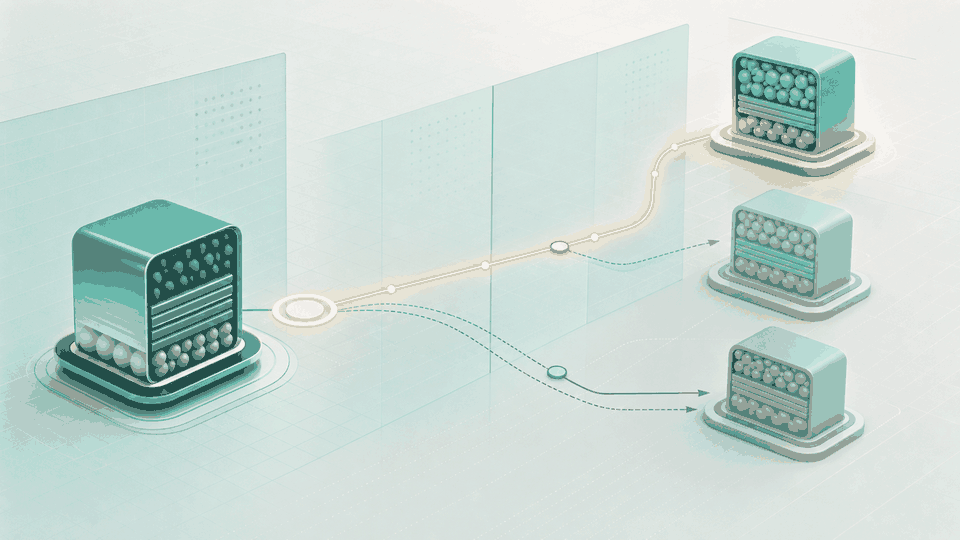
A covenant is taught as a script-controlled UTXO that validates a spend and the next output, not as account storage mutated in place. This page sits in Covenants. It gives the topic a plain-language handle first, then shows the working idea, the mechanism, the source trail, and any limits that still matter. This category keeps the UTXO model visible while explaining stateful patterns. A covenant does not mutate account storage in place; it validates a spend and the successor output that carries the next state.
The writing follows a simple Kaspa documentation pattern: answer the practical question first, then link outward for details. The closest public sources for this page are DOC-TOCCATA-COVENANT-STATE, KIP-0017, KIP-0020, RK-COVENANTS, RK-SIGHASH. Local notes can help choose what to explain, but public-facing references resolve to upstream websites, repositories, papers, release pages, or docs.
How to think about it#
The practical model starts by naming the layer that owns the topic: wallet use, node operation, consensus, transaction validation, Toccata script behavior, tooling, or research. From there, the page shows which public source can support the explanation and where the explanation becomes incomplete.
For Covenants And State, the model is built around these anchors: state is carried by spendable outputs; a spend reveals or checks current state; the script validates successor layout and state update; accepted successor UTXOs become the app's next discoverable heads; indexers help find current heads but do not define validity. This model is useful, but it does not encode every constant, branch, error type, or edge case. Those details belong in the source path and the source notes.
How it works#
1. state is carried by spendable outputs. Covenant mechanics stay anchored in UTXOs, but the page's main question is state continuity. The current output is spent, the script inspects transaction context, and the successor output must carry the allowed next state. Covenant IDs, authorization groups, script context, and indexer head tracking are helper surfaces; they do not replace the actual successor validation rule.
2. a spend reveals or checks current state. Covenant mechanics stay anchored in UTXOs, but the page's main question is state continuity. The current output is spent, the script inspects transaction context, and the successor output must carry the allowed next state. Covenant IDs, authorization groups, script context, and indexer head tracking are helper surfaces; they do not replace the actual successor validation rule.
3. the script validates successor layout and state update. Covenant mechanics stay anchored in UTXOs, but the page's main question is state continuity. The current output is spent, the script inspects transaction context, and the successor output must carry the allowed next state. Covenant IDs, authorization groups, script context, and indexer head tracking are helper surfaces; they do not replace the actual successor validation rule.
4. accepted successor UTXOs become the app's next discoverable heads. Covenant mechanics stay anchored in UTXOs, but the page's main question is state continuity. The current output is spent, the script inspects transaction context, and the successor output must carry the allowed next state. Covenant IDs, authorization groups, script context, and indexer head tracking are helper surfaces; they do not replace the actual successor validation rule.
5. indexers help find current heads but do not define validity. Developer integration pages explain an interface by naming the source object behind it. API, RPC, wRPC, SDK, wallet, and indexer surfaces are useful only when they preserve the fields and evidence that the protocol layer actually defines. Accepted-state evidence, replay behavior, schema choices, and endpoint disagreement must be checked separately.
This mechanism section keeps the covenant rule, the spent output, the successor output, covenant ID, authorization context, and indexer responsibility separate. Local case studies stay local experience unless rewritten against public sources.
How to check it#
| Step | Check | Evidence gate |
|---|---|---|
| 1 | Check state is carried by spendable outputs. | Read DOC-TOCCATA-COVENANT-STATE, KIP-0017, KIP-0020; verify spent-output context, successor-output rule, covenant ID, and negative cases separately. |
| 2 | Check a spend reveals or checks current state. | Read DOC-TOCCATA-COVENANT-STATE, KIP-0017, KIP-0020; verify spent-output context, successor-output rule, covenant ID, and negative cases separately. |
| 3 | Check the script validates successor layout and state update. | Read DOC-TOCCATA-COVENANT-STATE, KIP-0017, KIP-0020; verify spent-output context, successor-output rule, covenant ID, and negative cases separately. |
| 4 | Check accepted successor UTXOs become the app's next discoverable heads. | Read DOC-TOCCATA-COVENANT-STATE, KIP-0017, KIP-0020; verify spent-output context, successor-output rule, covenant ID, and negative cases separately. |
| 5 | Check indexers help find current heads but do not define validity. | Read DOC-TOCCATA-COVENANT-STATE, KIP-0017, KIP-0020; verify spent-output context, successor-output rule, covenant ID, and negative cases separately. |
When using this page for covenant design, verify the spent output, script context, authorization rule, successor output, state encoding, and negative cases separately. Indexer head tracking and local design notes are supporting evidence, not replacements for the covenant rule.
Related Pages#
- covenants
- successor-output-validation